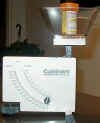
GRAMS
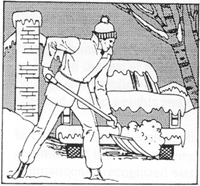
25 Degrees Fahrenheit
|
COMMON PREFIXES
(to be used with basic units)
milli: one-thousandth (0.001)
centi:one-hundredth (0.01)
kilo: one-thousand times (1000)
For example:
1000 millimeters = 1 meter
100 centimeters = 1 meter
1000 meters = 1 kilometer
|
1 LITER
|
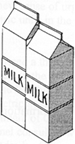 |
1 QUART
|
|
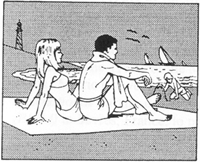
25 Degrees Celsius |
OTHER COMMONLY USED UNITS
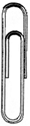
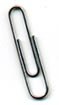
millimeter: 0.001 meter - diameter of a paper clip wire
centimeter: 0.01 meter - a little more than the width of a paper clip (about 0.4 inch)
kilometer: 1000 meters - somewhat further than 1/2 mile (about 0.6 miles)
kilogram: 1000 grams - a little more than 2 pounds (about 2.2 pounds)
milliliter: 0.001 liter - five of them make a teaspoon
OTHER USEFUL UNITS
hectare: about 2 1/2 acres
metric ton: about one ton
|
|
|
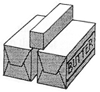
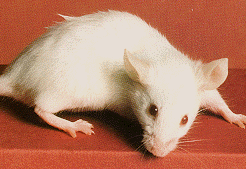
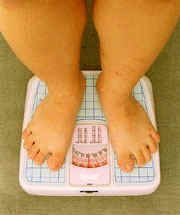
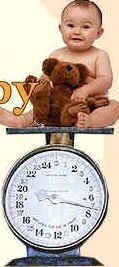
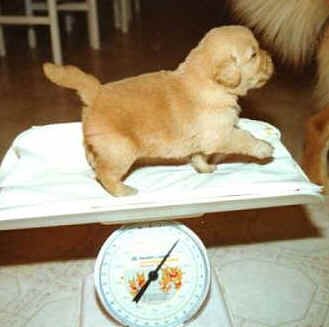
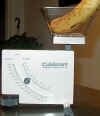
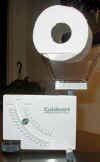
A gram is a measure of weight, or mass.
Something can be big, but light and spongy. It would not have a great mass.
Click the site below to help you learnthe American equivalents
in ounces, pounds, and tons.
Write the American equivalent in the space below the metric label.

Make your own metric balance scale.
Cut 8 pieces of cord into equal lengths.
Tie four strands together in a knot at the top and at the bottom to make a sling.
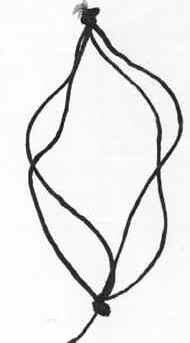
Cut the middle part out of the coat hanger and turn the hook sideways.
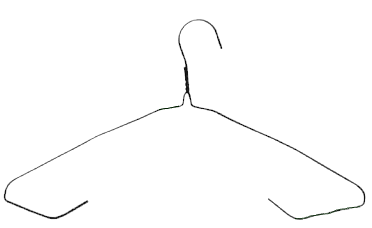
Be careful of sharp edges.
Hang the hook on the edge of a table,
but place a piece of cardboard under the hook to protect the table.
Hang one sling by one of the knots you tied on one hook and the other on the other hook.
Next place two small saucers that have the same weight in each sling. (Use plastic!)
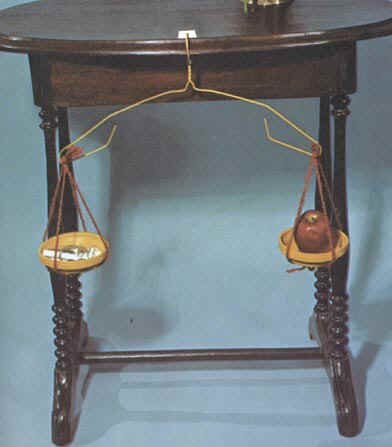
To find the mass of an apple, put the apple in one saucer.
Then put nickels, pennies, paper clips, etc. in the other sauce
until both saucers are even with each other.
Experiment with small objects you find around your house.
Keep a record of each item and its gram weight.